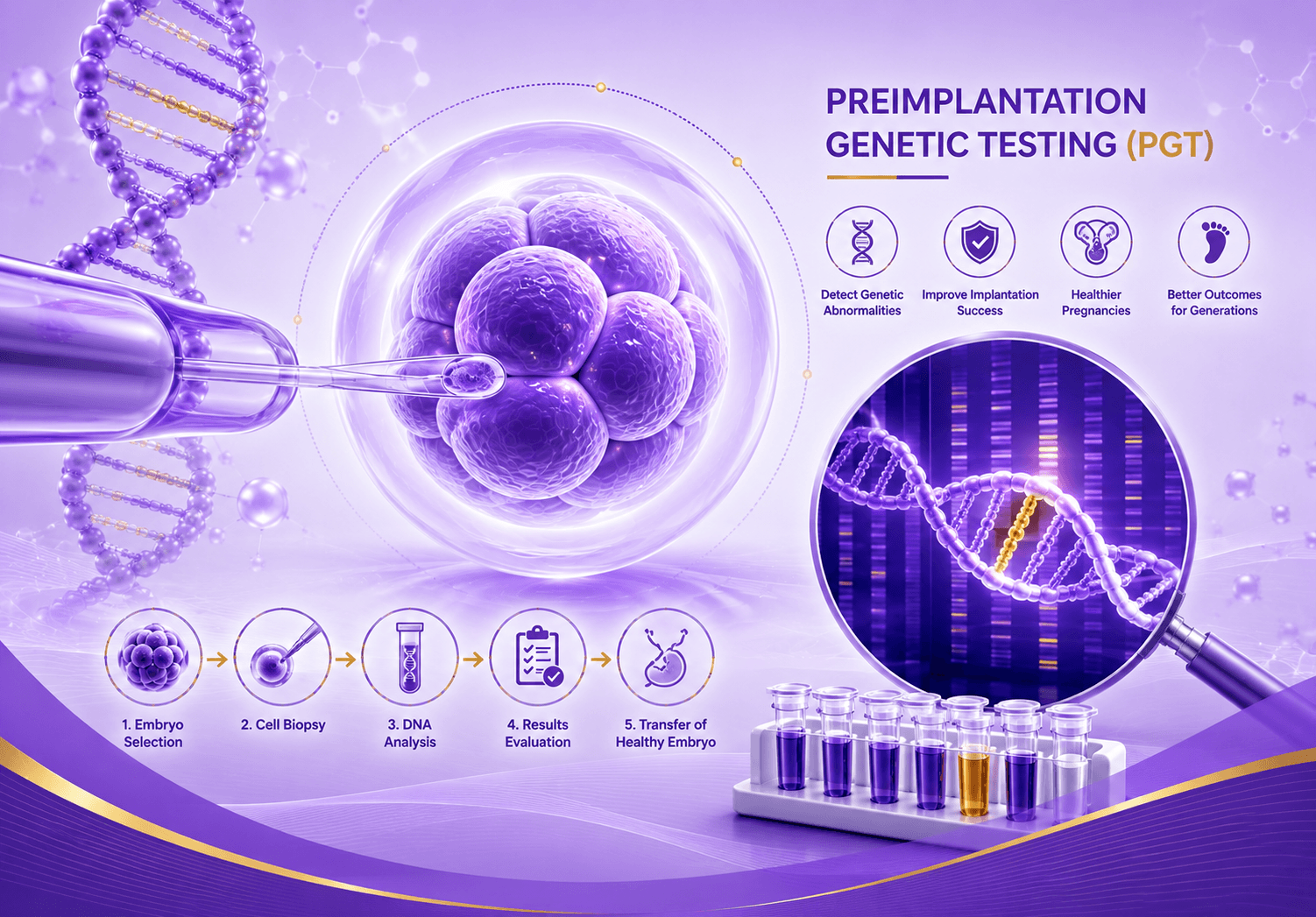
Preimplantation Genetic Testing (PGT)
“ Protecting your lineage, anchoring your hope in certainty.”
When you have experienced the quiet heartbreak of recurring miscarriages or unexplained IVF hurdles, taking the next step requires an immense amount of courage. We understand that you are not just looking for a pregnancy; you are looking for the reassurance that your future baby will be healthy, strong, and safe. PGT is our way of giving you that profound peace of mind, adding an extra layer of scientific protection before your embryo ever returns home to you.
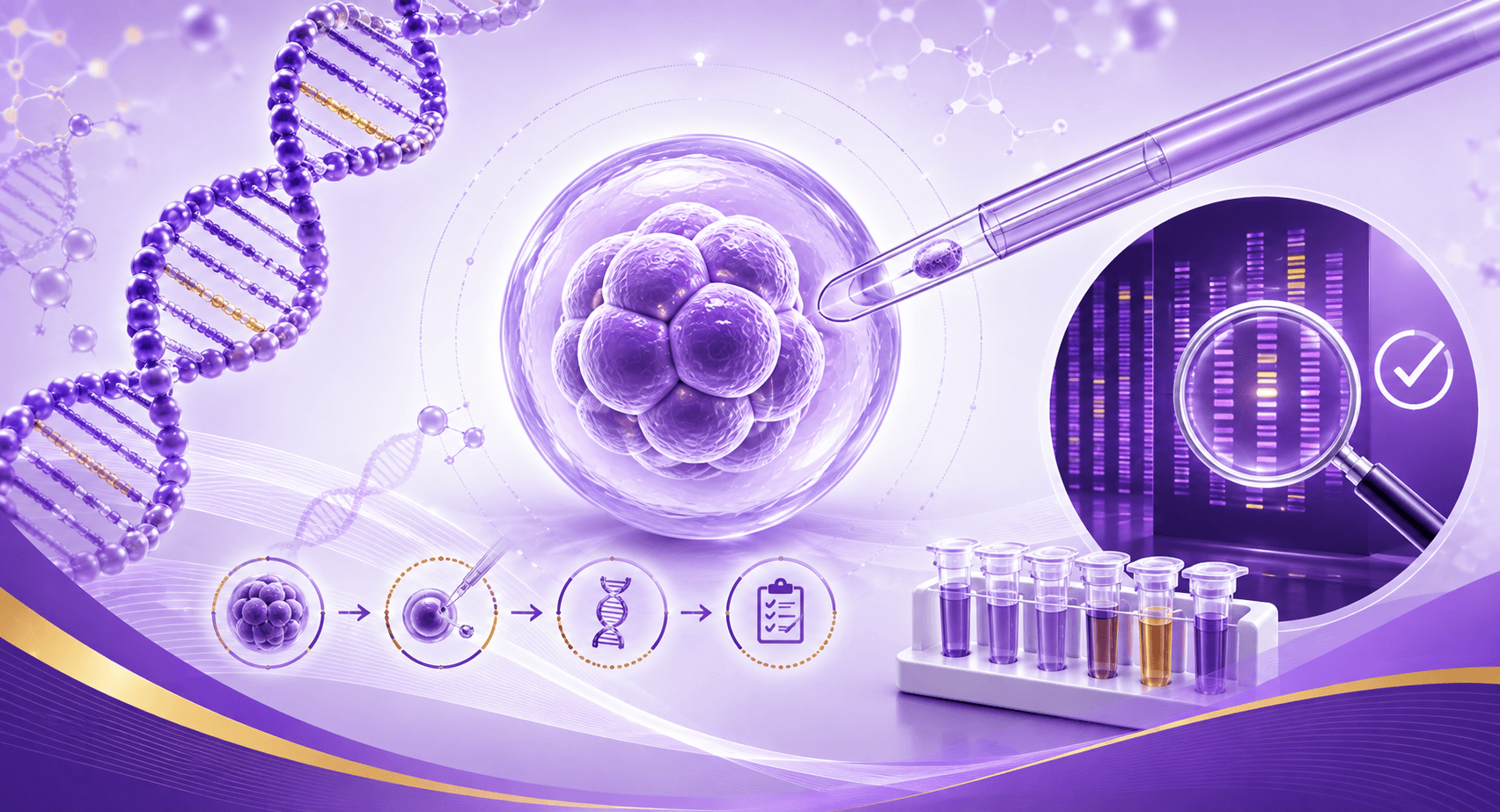
Performed within the microscopic safety of our elite embryology laboratory, PGT allows us to gently and safely screen embryos at the cellular level. With absolute precision, our experts take a tiny, harmless sample of cells from a developing blastocyst—without touching the cells that will actually form your baby. We then analyse the genetic blueprint to ensure the embryo has the correct number of chromosomes, filtering out hidden genetic conditions that could stand in the way of a successful, healthy pregnancy.
By choosing PGT, you are replacing the anxiety of the unknown with evidence-based confidence. It allows us to select your single strongest embryo, maximizing your chances of a smooth pregnancy and bringing you closer than ever to holding a healthy, laughing baby in your arms.
What is it?
Pre-implantation Genetic Testing (PGT) is one of the most advanced developments in reproductive medicine, combining the precision of modern genetics with In Vitro Fertilization (IVF). It enables the genetic assessment of embryos before they are transferred into the uterus, helping identify embryos with normal chromosomal makeup or those free from specific inherited genetic conditions, depending on the type of testing performed. PGT is carried out as part of an IVF cycle and is
Who can opt for it?
- Couples with recurrent pregnancy loss.
- Couples with recurrent implantation failure.
- Women of advanced maternal age.
- Couples with known chromosomal rearrangements (e.g., balanced translocations).
- Couples with a family history of inherited genetic disorders.
- Couples at risk of passing on specific single-gene disorders.
Why is it done?
- To identify embryos with normal chromosomal makeup before transfer.
- To reduce the risk of transferring embryos affected by certain genetic disorders.
- To improve embryo selection in appropriate clinical situations.
- To reduce the risk of miscarriage associated with chromosomal abnormalities.
- To support informed decision-making following genetic counselling.