Fertility Enhancing Surgeries
“Restoring harmony, clearing the way for life to bloom.”
Sometimes, the body simply needs a gentle structural correction to open the doors to conception. When physical barriers or anatomical challenges stand in the way of your dream, fertility enhancing surgeries offer a transformative path forward. At Sequel IVF, we look at these specialized procedures not merely as medical interventions, but as a restorative process—carefully preparing your body to become a warm, welcoming home for your future child.
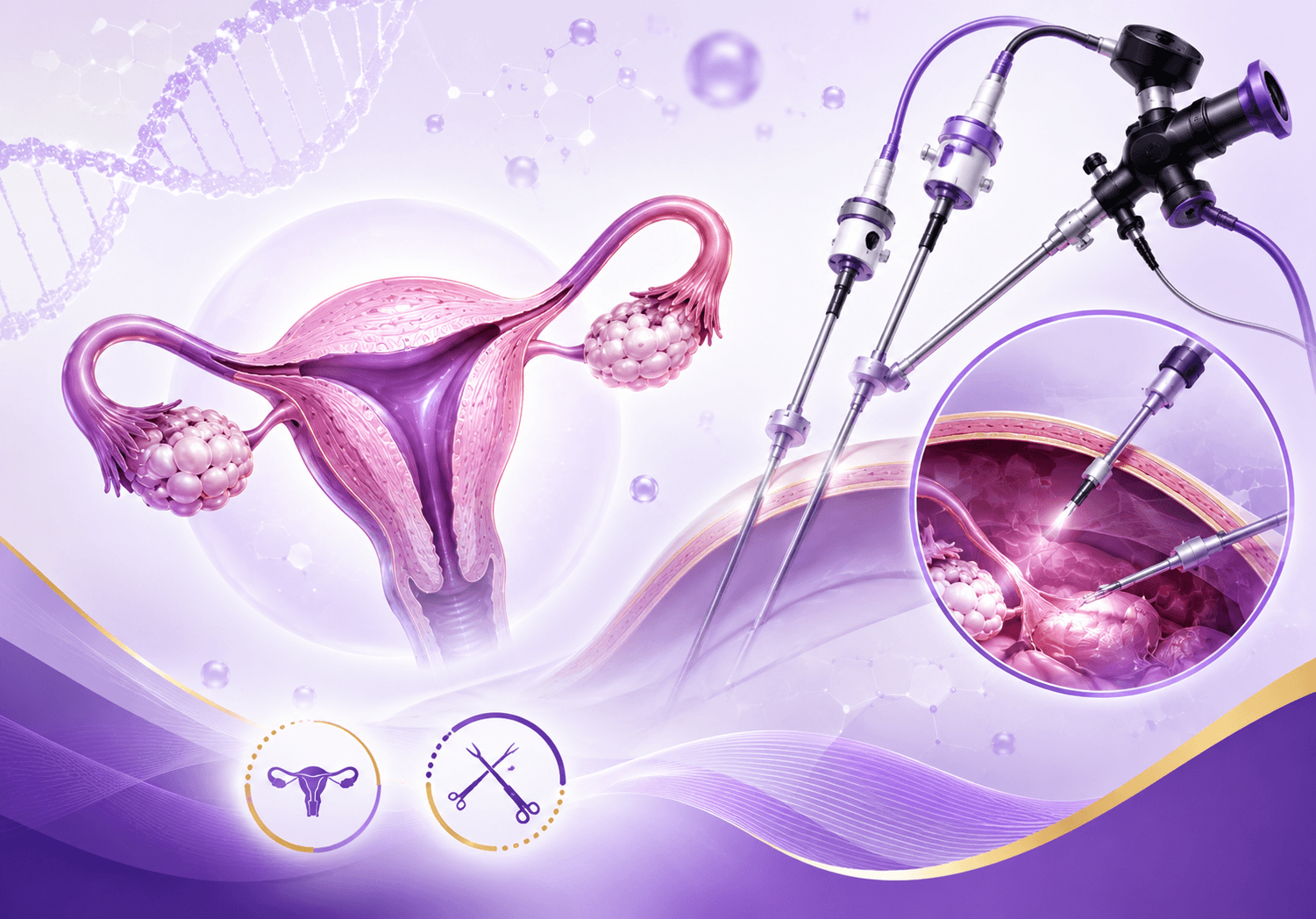
Utilizing advanced, minimally invasive techniques like laparoscopy and hysteroscopy, our skilled surgical team can precisely diagnose and treat conditions such as uterine fibroids, polyps, ovarian cysts, or blocked fallopian tubes. Because these procedures are performed through tiny incisions or natural pathways, they offer a gentler experience for your body, ensuring minimal discomfort, absolute precision, and a much faster recovery time.
By gently removing the physical hurdles that have delayed your journey, we restore your reproductive health to its natural, optimal balance. We handle the structural precision with elite surgical care, clearing a beautiful, unobstructed path so that nature and science can seamlessly work together to bring your miracle to life.
Laparoscopy
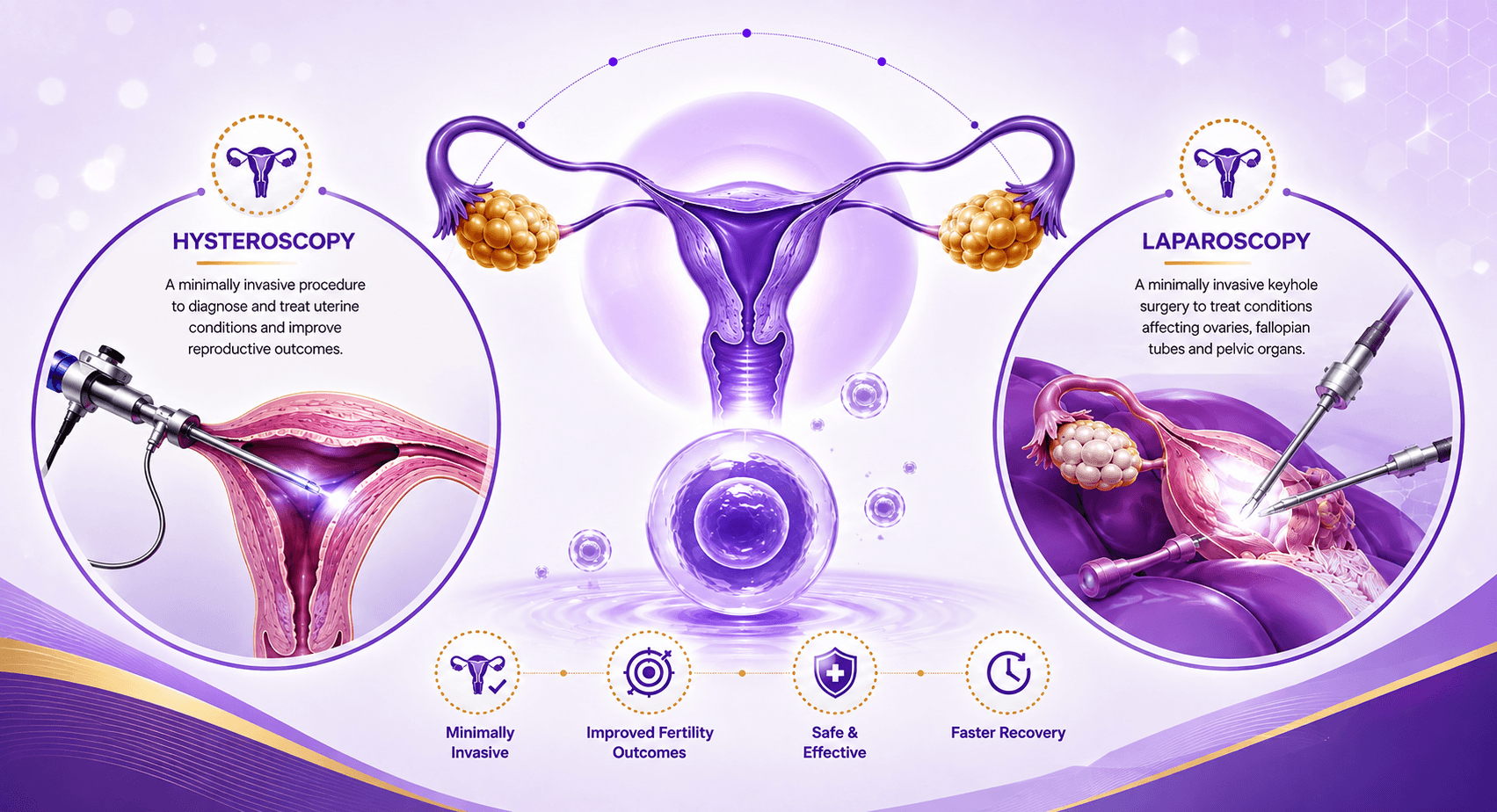
Laparoscopy is a minimally invasive surgical procedure that allows the doctor to examine and treat conditions affecting the uterus, fallopian tubes, ovaries, and other pelvic organs through small keyhole incisions. A thin telescope (laparoscope) equipped with a high-definition camera is inserted through the abdomen, providing a detailed view of the pelvic cavity. In addition to diagnosing infertility-related conditions, laparoscopy also allows many abnormalities to be treated during the same procedure.
Who can opt for it?
- Women with unexplained infertility.
- Women suspected to have endometriosis.
- Women with blocked or damaged fallopian tubes.
- Women with ovarian cysts or pelvic adhesions.
- Women with chronic pelvic pain.
- Women requiring fertility-enhancing surgical treatment before IVF or IUI.
Why is it done?
- To diagnose the cause of infertility.
- To evaluate the uterus, fallopian tubes, ovaries, and pelvic cavity.
- To treat endometriosis, adhesions, ovarian cysts, and tubal disorders.
- To improve fertility by restoring normal pelvic anatomy where appropriate.
- To reduce pelvic pain associated with certain gynecological conditions.
Hysteroscopy
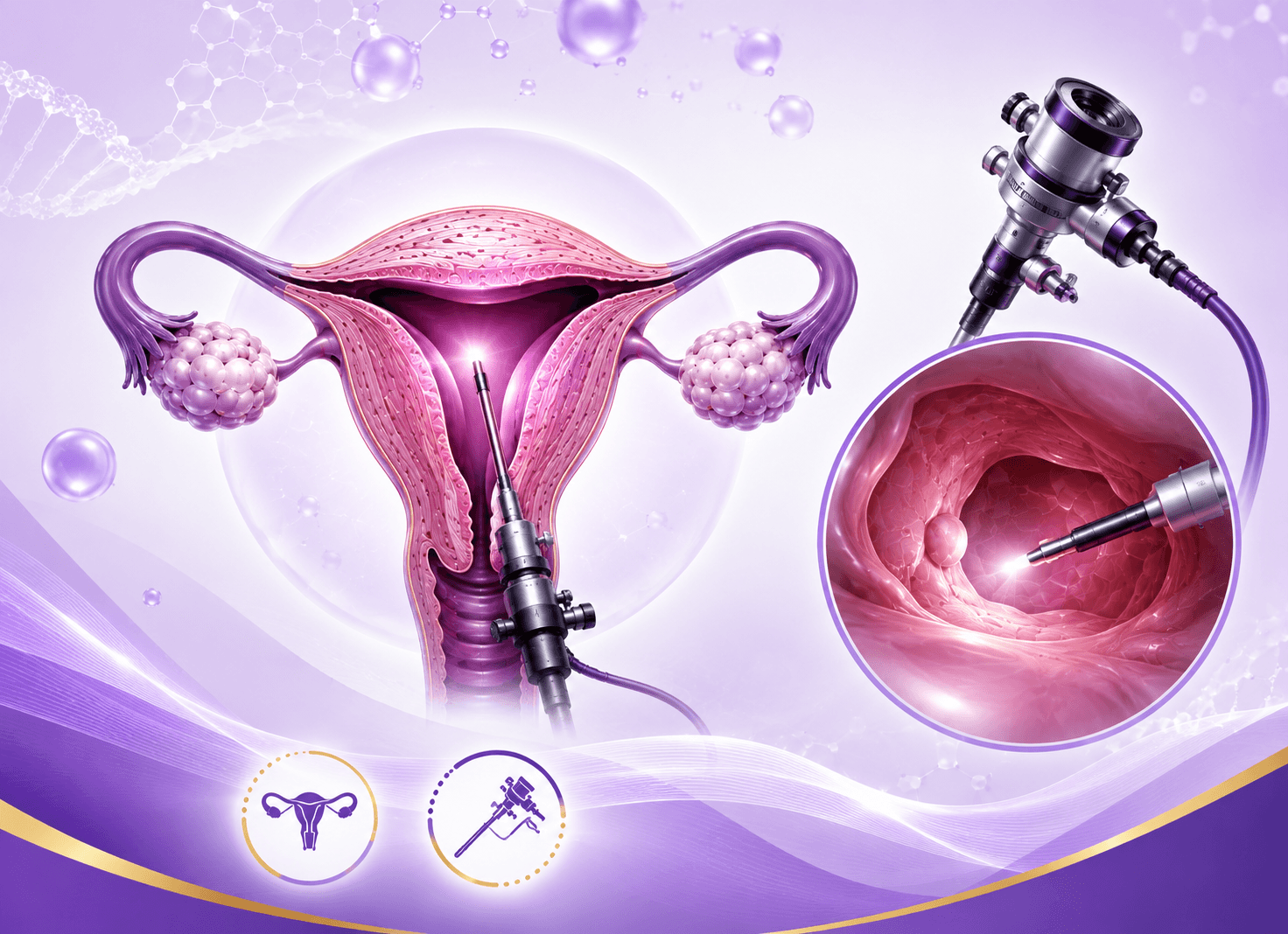
Hysteroscopy is a minimally invasive procedure that allows direct visualization of the inside of the uterus using a thin telescope called a hysteroscope. It helps diagnose and treat abnormalities within the uterine cavity that may affect fertility, implantation, or pregnancy outcomes. Many conditions can be corrected during the same procedure without the need for major surgery.
Who can opt for it?
- Women with recurrent implantation failure.
- Women with recurrent pregnancy loss.
- Women with abnormal uterine bleeding.
- Women suspected to have uterine polyps or fibroids.
- Women with uterine septum or congenital uterine abnormalities.
- Women requiring evaluation before IVF or embryo transfer.
Why is it done?
- To evaluate the uterine cavity.
- To diagnose polyps, fibroids, adhesions, and uterine septum.
- To remove abnormalities that may interfere with implantation.
- To improve the chances of successful pregnancy in appropriate patients.
- To investigate recurrent implantation failure or recurrent miscarriage.